Topical science for healthier hair, nails and skin.
KGH is developing indication-specific topical formulations for hair regrowth, nail health, eyelashes and eczema. Our approach brings veterinary experience, formulation science and human pilot evaluation into one development platform.
KGH Human is a Swiss biotechnology company developing topical therapies for hair, nails and skin. Our formulations build on commercially licensed, patented veterinary technology and an established API, and are now in five expert-led human pilot studies in Ohio.
The problems we are solving
Hair loss and sheddingScalp inflammation and shedding. Minoxidil can irritate the scalp, and finasteride is not indicated for women.
Disease nailsInfection and inflammation, with poor penetration through dense nail keratin.
EczemaChildhood flares, itch and barrier damage.
Cosmetic nailsBrittleness, splitting and breakage.
EyelashesSparse or fragile lashes. Bimatoprost can cause irritation and pigmentation.
How we are different
An approved API, developed for new indicationsAn established active ingredient with decades of clinical use and human safety experience, already approved for use in children for other indications. Why this matters
Botanicals, peptides and amino acidsSelected to complement the active with hydration, soothing, barrier and tissue support, in a vehicle matched to scalp, nail or skin.
A multi-action approachReducing inflammation at the site and supporting barrier healing together. Local action and tolerability are development objectives that the pilots are assessing.
Less reliance on steroids and immunosuppressantsA development goal is to reduce reliance on steroids and immunosuppressive treatments.
Who we want to help
Children with eczema
Around 9.3 million US children have diagnosed eczema, 12.7% of children aged 0 to 17 (2024 CDC survey, indicative estimate). We are looking for safe, well-tolerated alternatives applied at the affected skin, with less reliance on steroids.
Immunocompromised patients with nail disease
Safe local options for broader patient use are an unmet need. Broad suitability, including for immunocompromised patients, is a development goal for the disease-nail programme.
Suitability for children and immunocompromised patients is under evaluation and has not yet been established.
02Pipeline
Our pipeline
Five topical programmes. Each formulation is produced and is now in a human pilot study of at least 30 subjects. The next stage is partner-supported clinical trials.
Hair regrowthVeterinary hair regrowth across species
Cosmetic nailsVeterinary hoof growth and repair
EyelashesFollicle biology shared with scalp hair
Disease nailsHoof delivery model and equine ringworm cases
EczemaVeterinary dermatitis observations
Filled: complete. Half-filled: underway. Empty: next stage, planned with a partner.
Illustration
01Hair regrowth
Scalp inflammation, shedding and limited options suited to women.
Developing: a local, non-hormonal scalp serum and lotion. Both are formulated and in early human use, with an excellent initial user experience reported (company report).
Pilot
Dr Sumit Bapna, 30+ subjects
Category
USD 13.7B, alopecia, all therapies (Future Market Insights, 2026 est.)
Illustration
02Cosmetic nails
Brittleness, splitting and breakage.
Developing: a topical nail serum assessed for growth, strength and condition.
Pilot
CAPS clinical team, 30+ subjects
Category
USD 3.8B, nail treatment products (Grand View Research, 2026 est.)
Illustration
03Eyelashes
Sparse or fragile lashes, and tolerability concerns with current options.
Developing: a topical lash formulation, with length, density and local and ocular tolerability under assessment.
Fungal infection, nail psoriasis and a dense keratin barrier that limits penetration.
Developing: delivery through nail keratin with local tissue support. Pilot endpoints: fungal clearance and healthy new nail.
Pilot
Dr Jennifer Nash, 30+ subjects
Category
USD 6.17B, fungal nail (Fortune Business Insights, 2026 est.)
Illustration
05Eczema
Recurring flares, itch and barrier damage, including in children.
Developing: a topical applied at the affected site, aimed at local itch, inflammation and barrier repair. A development goal is to reduce reliance on steroids.
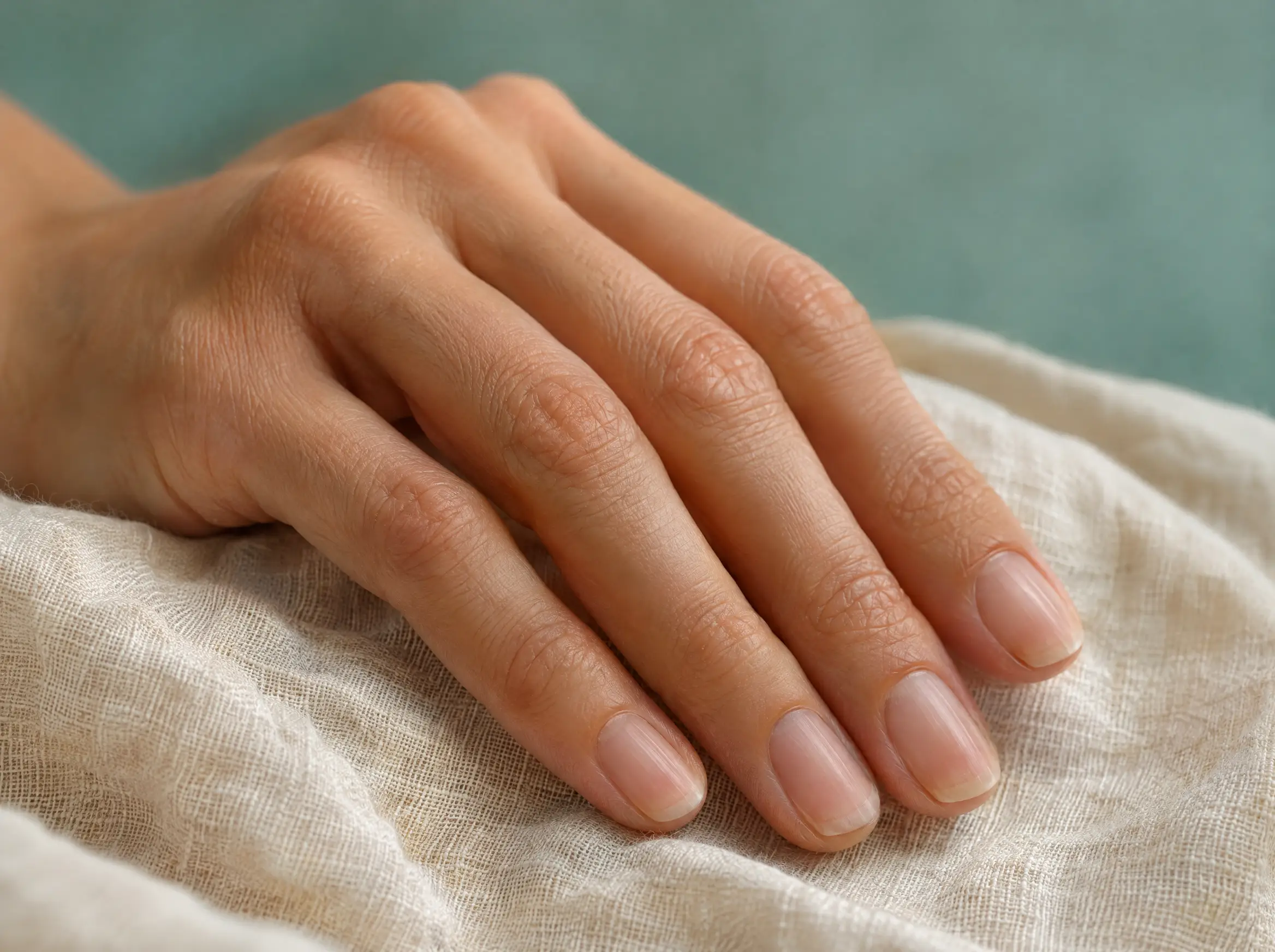
Category figures are third-party global market estimates for context. They are not KGH sales forecasts. Programme images are illustrations and do not show participants, products or results.
03Science
From veterinary studies to human pilots
KGH's human programmes grew out of commercially licensed, patented veterinary topicals. What we observed in animals, from hair regrowth to hoof repair and skin recovery, formed the foundation for the human pilot studies now underway.
Fig. 1 Development path.
Skin
Dermatitis across species
KGH's veterinary topicals have been used on inflammatory skin conditions in animals, including dogs, horses and livestock. The underlying biology is shared across mammals: mast cells release mediators such as histamine and leukotrienes, and persistent inflammation weakens the skin barrier. Because the same mechanisms operate in human skin, these veterinary observations shaped the formulation rationale for our human eczema programme, now being evaluated in a human pilot.
Fungal infection
Ringworm field pilot in horses
In a field pilot, KGH topicals were applied to horses with ringworm. Both documented cases showed visible lesion improvement by Day 14 (photographic observation). Ringworm and many cases of onychomycosis, fungal nail disease, are caused by the same fungal group, dermatophytes, which infect keratin in skin and nails. That is why our human disease-nail pilot includes fungal testing alongside healthy new nail growth.
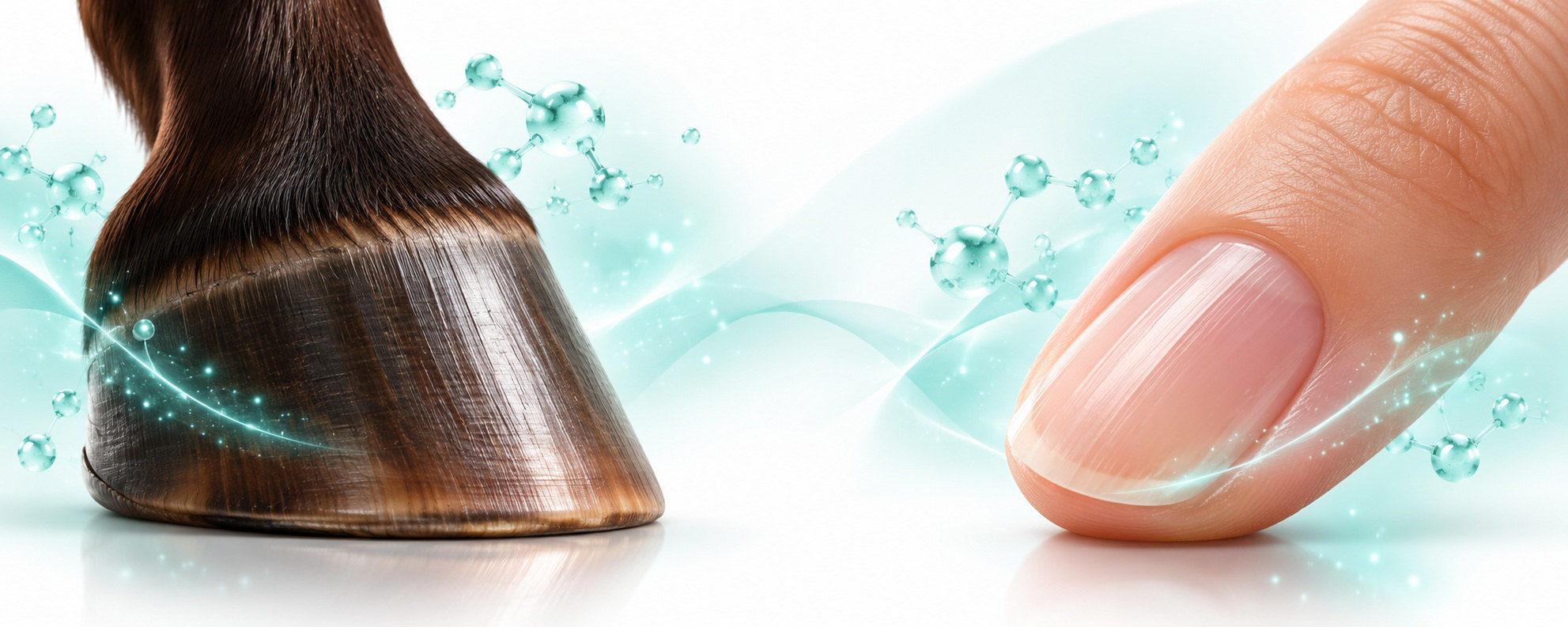
Fig. 2 Illustration. Equine hoof and human nail share a dense hard-keratin barrier.
Nails
Hoof to nail
Hoof and nail are both dense keratin. Published work (Dobler et al., 2022) found correlated uptake of model compounds in both tissues, and hoof membranes are an established model for testing nail delivery.
1982Ciclopirox approved in the US as a human skin cream.
1997Bovine-hoof permeability study.
1999Ciclopirox nail lacquer approved in the US.
A published precedent: hoof research preceded nail-lacquer approval for a medicine that already had human skin use.
Controlled veterinary study
Equine hoof study, Day 35
Conducted by Invetus. 10 treated horses and 10 controls, assessed by a blinded veterinarian and farrier.
Moisture meter reading
11.3% vs 10.1%
Higher in the treated group.
Veterinary total score
2.9 vs 4.0
Lower means better condition.
Farrier crack score
0.3 vs 1.1
Lower means fewer cracks.
Hoof growth over 34 days
+41% 11.03 vs 7.82 mm
KGH equine growth evidence. Reported separately from the Day 35 scores.
Our formulations are built on an active pharmaceutical ingredient (API) that is already approved for other indications and has decades of clinical use, including use in children. KGH is developing this established API, in new topical formulations, for new indications in hair, nail and skin conditions.
Because the API's safety profile is already well characterised in its approved uses, we believe this provides a strong foundation for confidence in safety and may support an efficient regulatory pathway. In the United States, new indications and new formulations of approved active ingredients are commonly developed under the FDA 505(b)(2) pathway, which allows reference to existing data.
Any regulatory pathway is subject to review and agreement with the relevant authorities. The safety and efficacy of KGH formulations in their new indications must still be established in clinical studies.
Decadesof clinical use and human safety experience
Childrenalready approved for use in children for other indications
Localmast-cell mediator control at the site: histamine and leukotrienes
05Human pilots
Five expert-led pilots in Ohio
A minimum of 30 subjects in each pilot. Full datasets are expected over the next six months, with follow-up partner meetings in Q1 2027 to review pilot data.
Dr Sumit Bapna, MD
Dual board-certified facial plastic and reconstructive surgeon.
Hair regrowth30+ subjectsHair growth and tolerability, with photographic follow-up and questionnaires
Dr Jennifer Nash, MD
Board-certified dermatologist.
Disease nails30+ subjectsFungal clearance and healthy new nail, with fungal testing
Eczema30+ subjectsLocal itch, inflammation and skin-barrier repair
CAPS clinical team
Columbus Aesthetic & Plastic Surgery. Photography and professional assessment.
Cosmetic nails30+ subjectsGrowth, strength and condition, with professional assessment
Eyelashes30+ subjectsLength, density, shedding and local and ocular tolerability
CAPS: Columbus Aesthetic & Plastic Surgery, Columbus, Ohio. Pilots are early evaluations. Larger cohorts will be needed to substantiate safety and tolerability.
Early hair pilot observations
Positiveuser feedback
Lessshedding reported
Noadverse events reported to date
Company report. Photographs from the hair pilot and early human use, at 30 to 60 days. These are observations, not controlled trial results. Select any photograph to view it full size.
Female participant Scalp serum, both sides
Side 1
Side 2
Male participant, age 63 Frontal and posterior views
Frontal
Posterior and crown
Additional male participant Crown, three timepoints
Original supplied photographs, shown with cropping and proportional scaling only. Faces are obscured or cropped for participant privacy.
06Patents
Intellectual property
Human patent applications filed for each programme area.
Human programmes Applications filed
Hair (alopecia)Compositions and methods for treating alopecia.
Nail diseaseCompositions for nail diseases and disorders.
Nail and lash growthCompositions for nail and lash growth.
EczemaPatent application filed.
07Team
Who is doing this
Jussi HolopainenChief Executive Officer30+ years of global pharma leadership at GSK and AstraZeneca. Strategy and market access.
Julian NorrishFounder, R&D20+ years in animal health R&D. Formulation, study design and productisation.
Maximilian PlankChief Financial OfficerSerial entrepreneur with a law background. Leads legal, financing and operations.
Tony Buchta, R.Ph., MBAPharmaceutical Development & Manufacturing AdvisorCompounding-pharmacy leader for formulation, manufacturing and 503A/503B supply.
Dr Jennifer Nash, MDDermatology AdvisorBoard-certified dermatologist. Leads the disease-nail and eczema pilots.
Dr Sumit Bapna, MDClinical & Scientific AdvisorDual board-certified facial plastic and reconstructive surgeon. Leads the hair pilot.
Legal partners
Walder Wyss
Switzerland. Corporate counsel and governance.
Mintz
United States. Patent counsel.
08Partnership
Partner now, or after the pilot data.
We are looking for pharmaceutical, dermatology and telehealth partners to co-develop and license selected programmes.